
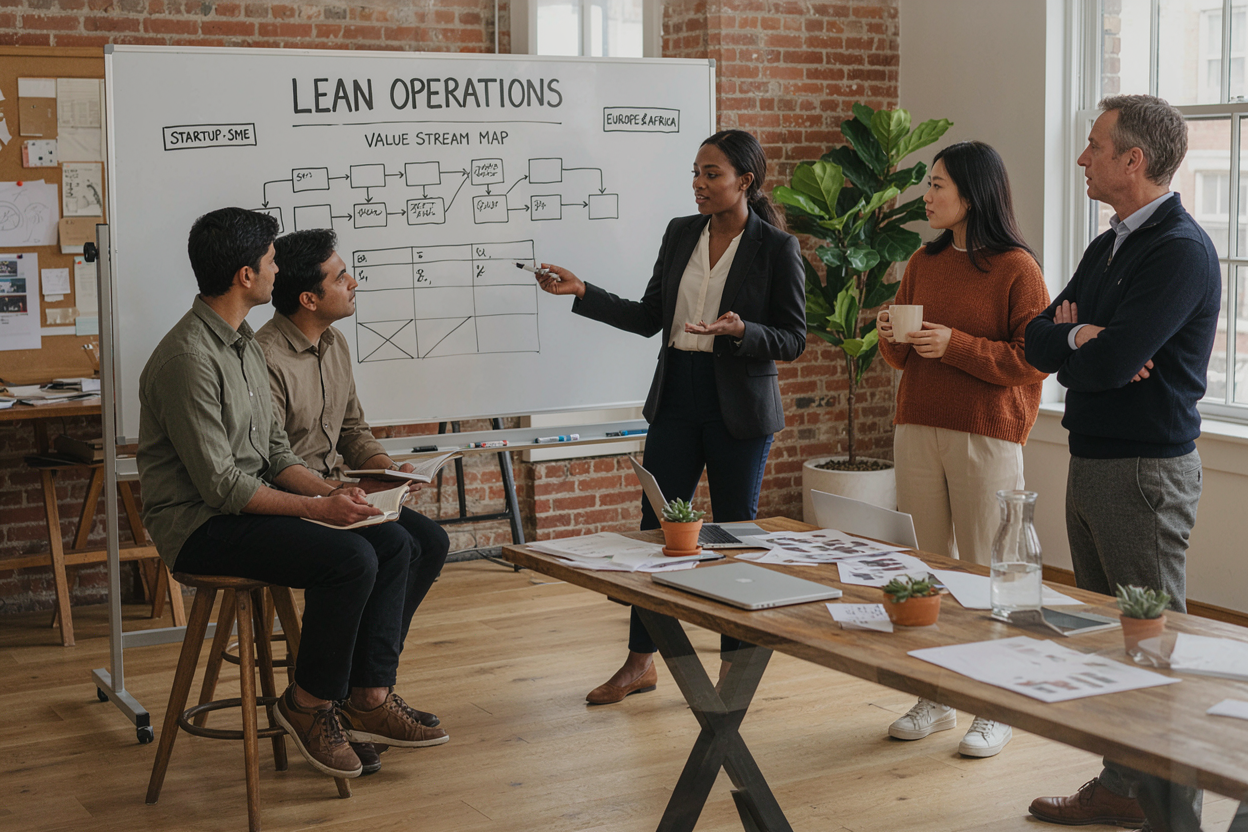

In 2026, the startup landscape across Europe and Africa is undergoing a profound cultural and financial shift. Gone are the days when raising massive venture capital rounds at inflated valuations was considered the ultimate badge of honor for early-stage entrepreneurs. Instead, founders from Lagos to London are discovering that bootstrapping and lean operations offer a far more sustainable path to long-term survival and true ownership. With global funding markets remaining disciplined and cautious, economic resilience has officially replaced rapid, cash-burning growth as the primary metric of entrepreneurial success.
For European founders navigating strict regulatory environments and a mature yet conservative investor ecosystem, lean operations eliminate the suffocating pressure of unrealistic growth targets. Rather than squandering runway on oversized offices and aggressive customer acquisition campaigns, lean startups focus heavily on product-market fit and capital efficiency from day one. This disciplined approach allows European innovators to weather macroeconomic uncertainties without having to sacrifice significant equity or surrender strategic control to external board members.
Meanwhile, across Africa’s vibrant tech hubs in Kenya, Nigeria, and South Africa, lean operations have evolved from a strategic choice into an absolute necessity. Currency volatility and fluctuating foreign venture capital inflows have taught African entrepreneurs how to build resilient, revenue-generating businesses that solve hyper-local problems without relying on foreign bailouts. By prioritizing operational frugality and immediate monetization, these startups are proving that sustainable cash flow is vastly superior to chasing vanity metrics funded by distant venture capitalists.
Adopting a lean model also fundamentally transforms the relationship between founders and their customers, shifting the focus entirely toward genuine value creation. When a startup is not beholden to aggressive venture capital return horizons, it can afford to listen closely to its user base, iterate slowly, and build products that genuinely stick. This customer-centric feedback loop naturally fosters organic growth, word-of-mouth marketing, and a loyal community that money simply cannot buy.
Furthermore, retaining a majority stake in your own enterprise grants founders the ultimate freedom to pivot, experiment, and build generational wealth without interference. When you own your company, your long-term vision aligns directly with your financial outcomes, shielding you from the painful down-rounds and forced fire sales that plague over-funded startups. In essence, bootstrapping grants the independence to build enduring businesses rather than ticking clocks designed to enrich institutional investors.
Ultimately, choosing lean operations over venture capital in 2026 is about reclaiming the true spirit of entrepreneurship: resourcefulness, agility, and grit. Whether you are launching a fintech solution in Nairobi or a deep-tech enterprise in Berlin, the message for founders is loud and clear: build lean, stay sovereign, and let sustainable revenue be your ultimate validation. The future belongs not to those who raise the most capital, but to those who need the least of it to thrive.
Dipo Adagbada
Lead Consultant & Strategist
CDE, London.